


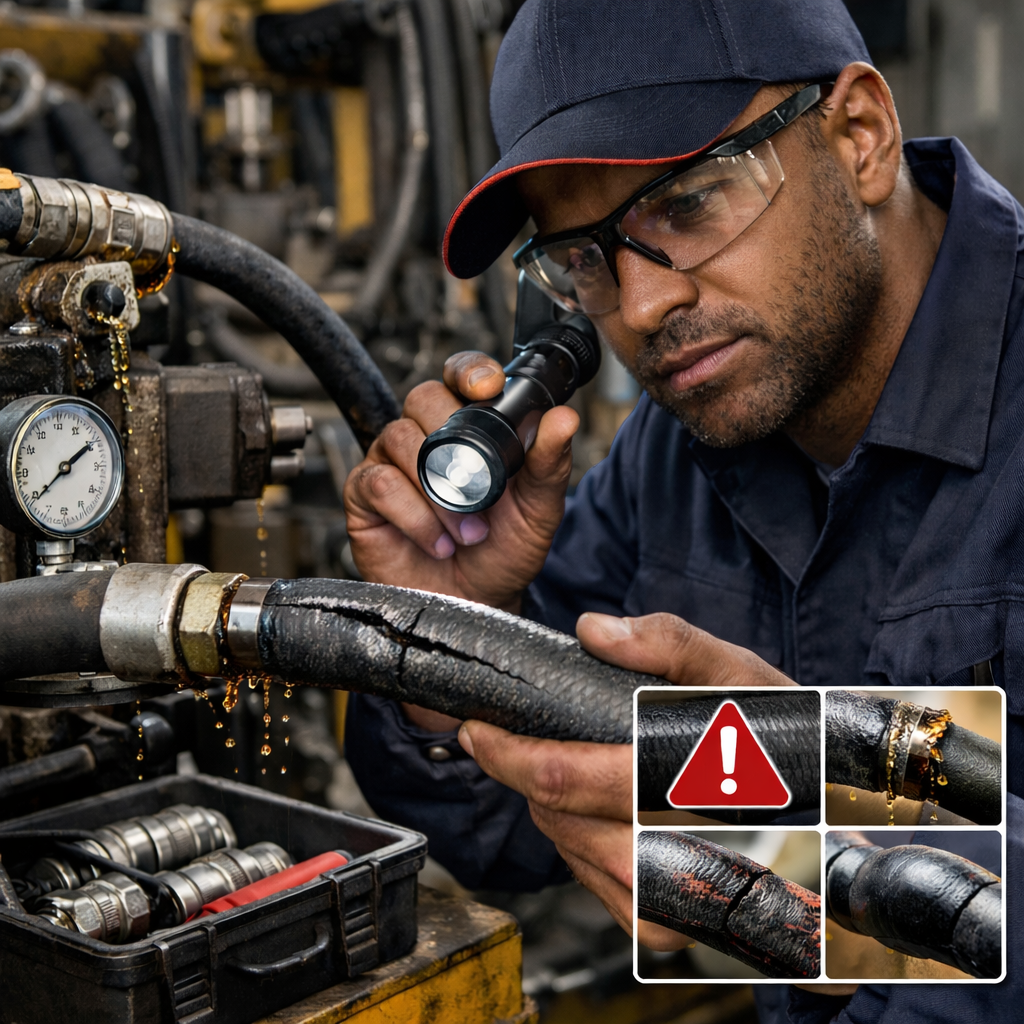
7 Signs Your Hydraulic Hose Needs Immediate Replacement
Cracks, leaks, bulging, and worn hose covers are common indicators of hydraulic hose failure. This guide explains the warning signs that your hydraulic hose needs immediate replacement.
7 Signs Your Hydraulic Hose Needs Immediate Replacement
Hydraulic hoses play a critical role in the operation of heavy equipment, industrial machinery, agricultural systems, and construction machines. These hoses carry pressurized hydraulic fluid that powers different components of a hydraulic system.
Over time, hydraulic hoses are exposed to high pressure, vibration, heat, abrasion, and environmental conditions that gradually wear them down. When a hose begins to deteriorate, it can eventually fail, leading to oil leaks, equipment downtime, safety hazards, and costly repairs.
Recognizing the warning signs of hydraulic hose failure early can help prevent sudden breakdowns and maintain the reliability of your equipment.
Below are seven important signs that indicate your hydraulic hose may need immediate replacement.
1. Visible Cracks on the Hose Surface
One of the most obvious signs of hose deterioration is the appearance of cracks on the outer surface of the hose.
Cracks often develop due to aging, exposure to sunlight, extreme temperatures, or chemical reactions with hydraulic fluids. As the outer layer weakens, the internal reinforcement of the hose becomes vulnerable to damage.
If these cracks continue to expand, they may lead to leakage or complete hose rupture under pressure.
What to Do
Inspect hoses regularly and replace any hose that shows significant cracking or surface deterioration.
2. Hydraulic Fluid Leaks
Hydraulic fluid leaks are a strong indication that a hose or fitting may be compromised. Leaks may appear as oil droplets, wet spots, or visible spraying of hydraulic fluid.
Leaks may occur due to:
Damaged hose covers
Worn fittings
Loose connections
Internal hose failure
Even small leaks should not be ignored because they can quickly escalate into larger failures.
What to Do
Locate the source of the leak and replace the damaged hose or fitting immediately to prevent further damage to the hydraulic system.
3. Blistering or Bulging on the Hose
Blistering or bulging occurs when the outer layer of the hose begins to swell or form bubbles.
This usually indicates internal damage to the reinforcement layers of the hose. The pressure inside the hose begins to push outward, causing the outer cover to expand.
A bulging hose is extremely dangerous because it may burst suddenly under operating pressure.
What to Do
If you observe blistering or bulging, stop using the equipment and replace the hose immediately.
4. Abrasion or Worn Hose Cover
Hydraulic hoses often operate in environments where they rub against machine components or metal surfaces. Over time, this contact can wear away the protective outer cover of the hose.
Once the outer cover is damaged, the internal reinforcement layers become exposed and vulnerable to failure.
Signs of abrasion include:
Visible wear marks
Flattened hose surfaces
Exposed reinforcement wires
What to Do
Replace hoses with severe abrasion damage and improve hose routing or install protective sleeves to prevent future wear.
5. Loose or Damaged Hose Fittings
Hose fittings are critical components that connect hydraulic hoses to equipment. If the fittings become loose, cracked, or damaged, the hose assembly may fail under pressure.
Improper crimping during fabrication can also cause fittings to separate from the hose.
Common warning signs include:
Oil leakage around the fitting
Visible movement between the hose and fitting
Corrosion on the fitting surface
What to Do
Replace hoses with damaged fittings and ensure the hose assembly is properly fabricated and installed.
6. Reduced Hydraulic System Performance
Sometimes hose problems may not be immediately visible but can still affect system performance.
If a hydraulic hose becomes internally damaged or restricted, it may reduce fluid flow within the system.
This can result in:
Slow equipment movement
Reduced hydraulic power
Unusual system pressure fluctuations
What to Do
Inspect hoses when hydraulic performance drops unexpectedly and replace hoses that show signs of internal damage.
7. Hose Hardening or Loss of Flexibility
Hydraulic hoses are designed to remain flexible so they can accommodate movement within the system.
However, exposure to heat, aging, and chemical reactions can cause hoses to become hard and brittle.
A hardened hose may develop cracks and is more likely to fail when subjected to bending or vibration.
What to Do
Replace hoses that feel unusually stiff, brittle, or difficult to bend.
The Importance of Regular Hydraulic Hose Inspection
Routine inspection is essential for maintaining a safe and efficient hydraulic system. Operators and maintenance teams should regularly check hoses for:
Surface cracks
Oil leaks
Bulging or swelling
Abrasion damage
Loose fittings
Loss of flexibility
Early detection allows problems to be addressed before they lead to unexpected equipment failure or costly downtime.
Conclusion
Hydraulic hoses operate under demanding conditions and naturally wear over time. Ignoring early warning signs can lead to serious equipment failure, environmental hazards, and expensive repairs.
By recognizing the signs that indicate a hose needs immediate replacement, equipment owners and operators can prevent sudden breakdowns, improve system reliability, and maintain safe working conditions.
If you notice any of the warning signs mentioned above, it is important to replace the hose promptly with a properly fabricated hydraulic hose assembly.
At Gigga Engineering Solutions, we provide professional hydraulic hose fabrication, replacement, and troubleshooting services to help keep your hydraulic systems operating efficiently and safely.
For reliable hydraulic hose services and high-quality hose assemblies, our team is ready to assist you with expert solutions tailored to your equipment needs.